
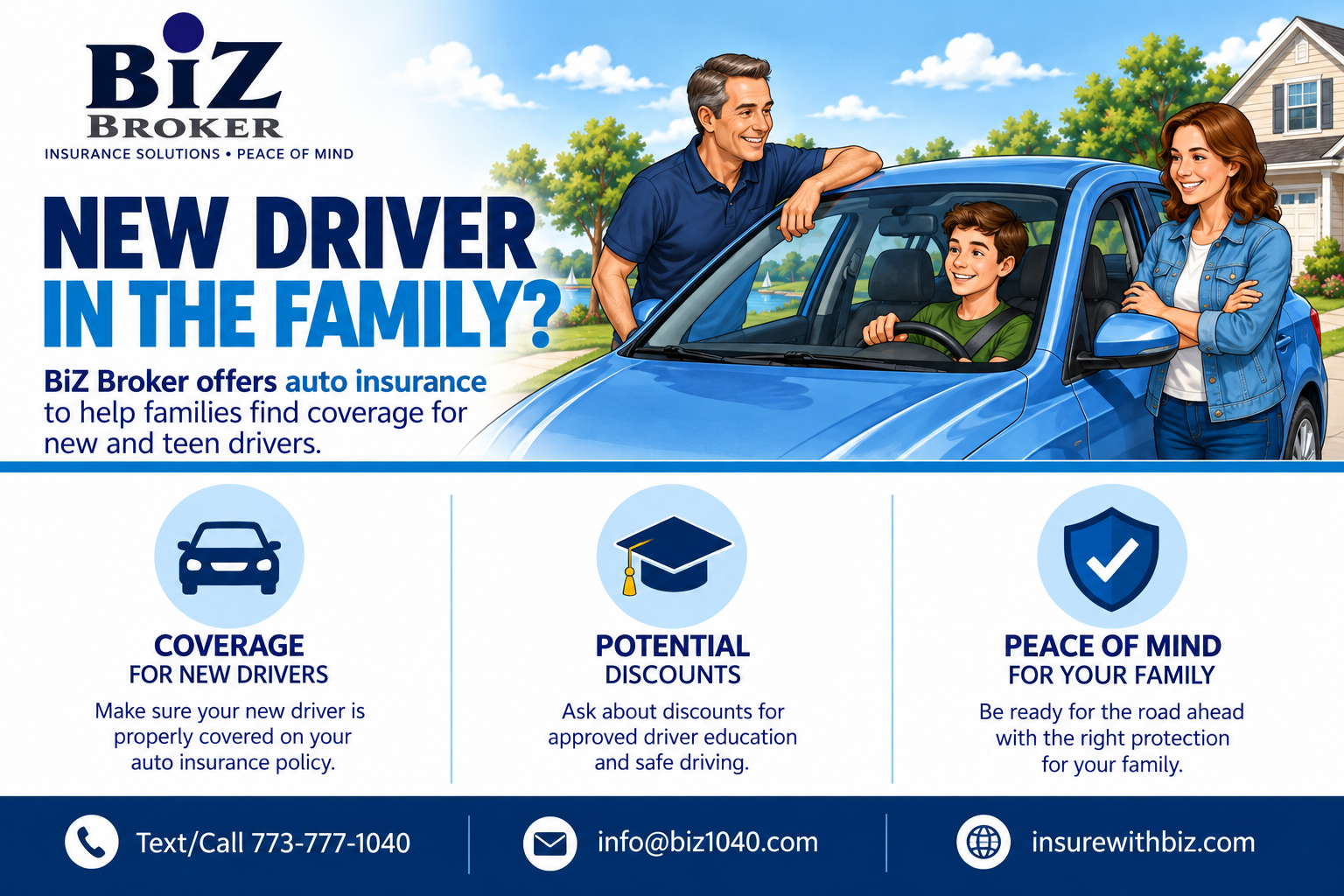
Your teen just passed the driving test, earned a driver's license, and is ready to take the wheel! At BiZ Broker, we know this exciting milestone also brings new responsibilities, safety concerns, and important auto insurance decisions for the entire family.
Whether your teenager is driving to school, work, or meeting friends, developing safe habits from the beginning can make a difference.
Here are 8 essential tips to help your new driver stay safe, confident, and prepared on the road.
1. Have an Emergency Plan Before Driving
Every new driver should know what to do when something unexpected happens.
✓ Keep the vehicle registration and proof of insurance accessible.
✓ Know what to do after an accident or during a traffic stop.
✓ Save emergency contacts and roadside assistance information.
✓ Learn how to use basic emergency equipment, including hazard lights and warning devices.
Insurance Tip: Review your auto policy to see whether Towing & Labor or Roadside Assistance coverage is included or available as an option.
2. Eliminate Distractions Behind the Wheel
Distracted driving is especially dangerous for inexperienced drivers.
✓ Put your phone away and activate driving mode.
✓ Set your GPS and music before leaving.
✓ Avoid eating, texting, or adjusting controls while driving.
✓ Limit conversations and other distractions from passengers.
Remember: A few seconds of distraction can change everything.
3. Watch for Unexpected Road Hazards
Safe driving requires more than watching the vehicle directly ahead.
✓ Look carefully for pedestrians and bicyclists.
✓ Slow down near school zones and school buses.
✓ Watch for wildlife, especially at dawn and dusk.
✓ Pay attention to construction zones and roadside workers.
Safety Tip: Encourage your teenager to scan the road ahead, check mirrors regularly, and maintain enough distance to react safely.
4. Be Extra Careful at Night and in Bad Weather
Limited experience combined with difficult driving conditions can increase accident risks.
✓ Reduce speed in rain, snow, fog, or icy conditions.
✓ Increase following distance when visibility or traction is poor.
✓ Practice nighttime driving gradually, following applicable licensing restrictions.
✓ Know when conditions are too dangerous to continue driving.
Parent Tip: Practice challenging driving situations together before your teenager needs to handle them independently.
5. Practice Defensive and Courteous Driving
A good driver doesn't just follow traffic laws—they anticipate possible mistakes by others.
✓ Never assume another driver will stop or yield.
✓ Avoid aggressive driving and road rage.
✓ Keep a safe distance from surrounding vehicles.
✓ Always wear a seat belt and require passengers to do the same.
Remember: Driving responsibly means making safe decisions, even when others don't.
6. Keep the Vehicle Ready for the Road
Basic vehicle maintenance helps reduce the chances of breakdowns and unexpected problems.
✓ Check tire pressure and tread condition.
✓ Keep headlights, brake lights, and windshield wipers working properly.
✓ Monitor fuel levels and essential vehicle fluids.
✓ Keep the windshield and mirrors clean.
✓ Store valuables out of sight when parking.
Insurance Tip: Comprehensive coverage may help with certain losses, such as vehicle theft, while Collision coverage can help pay for covered accident damage to your insured vehicle, subject to policy terms and deductibles. Personal belongings generally require separate coverage, such as applicable Homeowners or Renters Insurance.
7. Ask About Good Student and Other Discounts
Responsible habits can benefit your teenager both on and off the road.
Depending on the insurance carrier and eligibility requirements, your family may qualify for savings through:
✓ Good Student Discounts
✓ Driver Training Discounts
✓ Multi-Car Discounts
✓ Safe Driving or Telematics Programs
Insurance Tip: Discounts vary by insurance company, state, and policy. Ask BiZ Broker which opportunities may be available for your family.
8. Review Your Auto Insurance Before Handing Over the Keys
Adding a newly licensed teenager to your household can change your insurance needs and premiums.
Before your teen begins driving independently, review:
✓ Liability Coverage – Helps protect against covered injuries or property damage you or your teen cause to others.
✓ Collision Coverage – Helps pay for covered damage to your vehicle resulting from a collision.
✓ Comprehensive Coverage – Helps protect your vehicle from covered non-collision events, such as theft, vandalism, or hail.
✓ Uninsured/Underinsured Motorist Coverage – Helps provide protection when an at-fault driver has no insurance or insufficient coverage, subject to policy terms and state requirements.
✓ Deductibles & Coverage Limits – Make sure you understand your family's potential out-of-pocket expenses and financial protection.
Important: Contact your insurance agent when your teenager starts learning to drive and again when they become licensed. Requirements for listing or adding young drivers vary by carrier and state.
Website explanations are general only. Actual coverage depends on the policy, carrier, underwriting, limits, endorsements, exclusions, and written confirmation.